
Lighting is an essential part of every home, but making the wrong choices can cost more than you expect. From inefficient fixtures to poor installation planning, common lighting mistakes can lead to unnecessary electricity consumption, frequent replacements, and unexpected maintenance expenses.
At MEGAPLAN, we believe that choosing the right lighting means looking beyond appearance and upfront cost. It’s about finding solutions that deliver comfort, efficiency, and lasting value.
Here are seven LED lighting mistakes worth avoiding.
1. Choosing Lights Based on Wattage Instead of Brightness
One of the most common mistakes is assuming that higher wattage automatically means brighter lighting.
Wattage measures energy consumption, while lumens measure how much visible light a source produces.
Two LED fixtures with similar wattage can deliver different amounts of light depending on their efficiency and design.
The Fix: Compare lumens and luminous efficacy (lumens per watt), not wattage alone. Choose lighting that provides the brightness your room needs without unnecessary energy consumption.
2. Installing More Lights Than You Actually Need
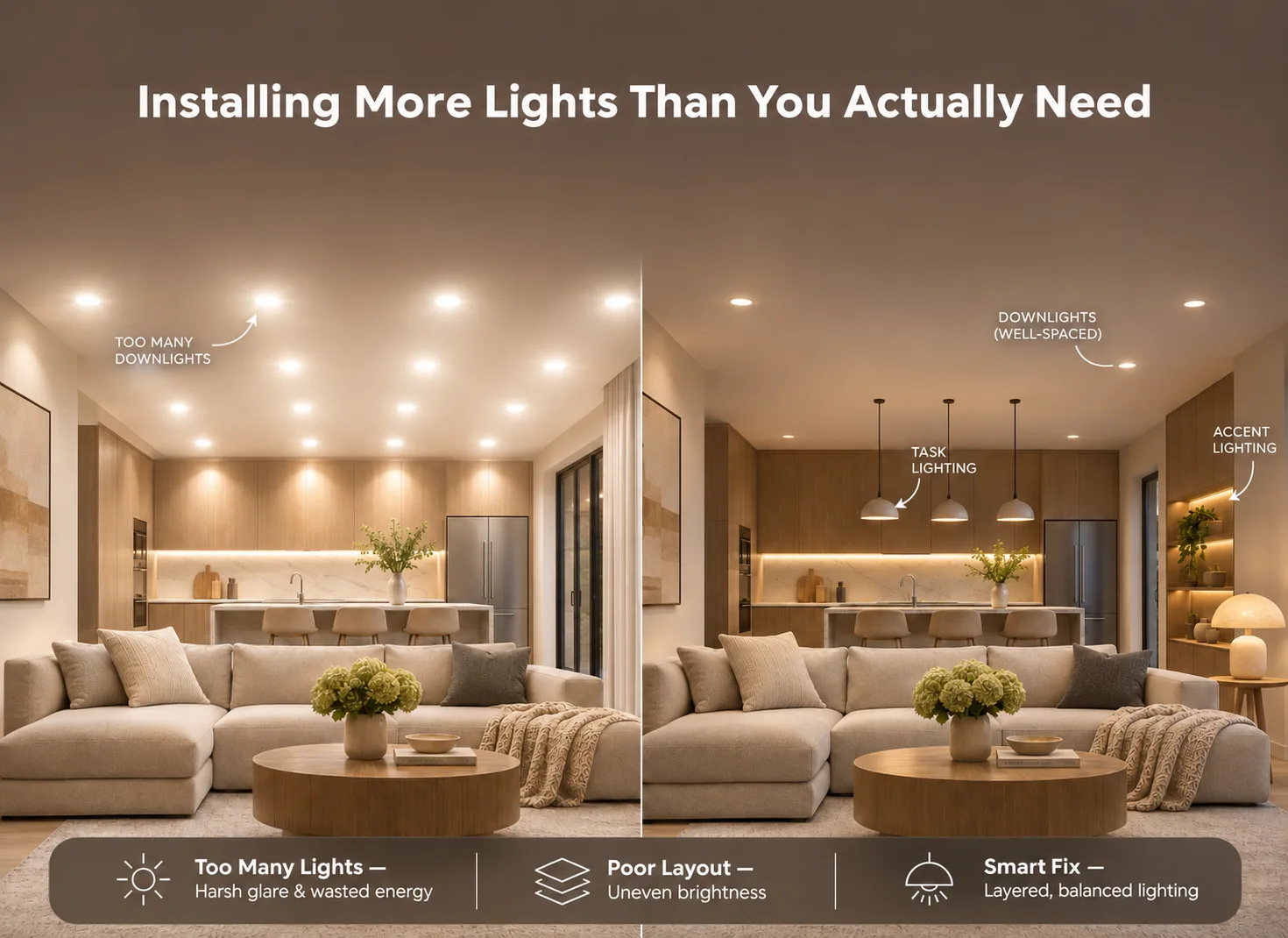
Adding more downlights may seem like the easiest way to brighten a room, but too many fixtures can create uncomfortable glare and increase energy use.
Poorly planned lighting layouts may also produce uneven brightness, leaving some areas overexposed while others remain in shadow.
The Fix: Plan fixture spacing, brightness, and beam angles according to your room dimensions and activities.
Consider combining ceiling lights with task and accent lighting instead of relying on excessive overhead fixtures.
Explore MEGAPLAN lighting products to compare the options currently available.
3. Overlooking Energy Efficiency
Not all LED lights provide the same level of performance.
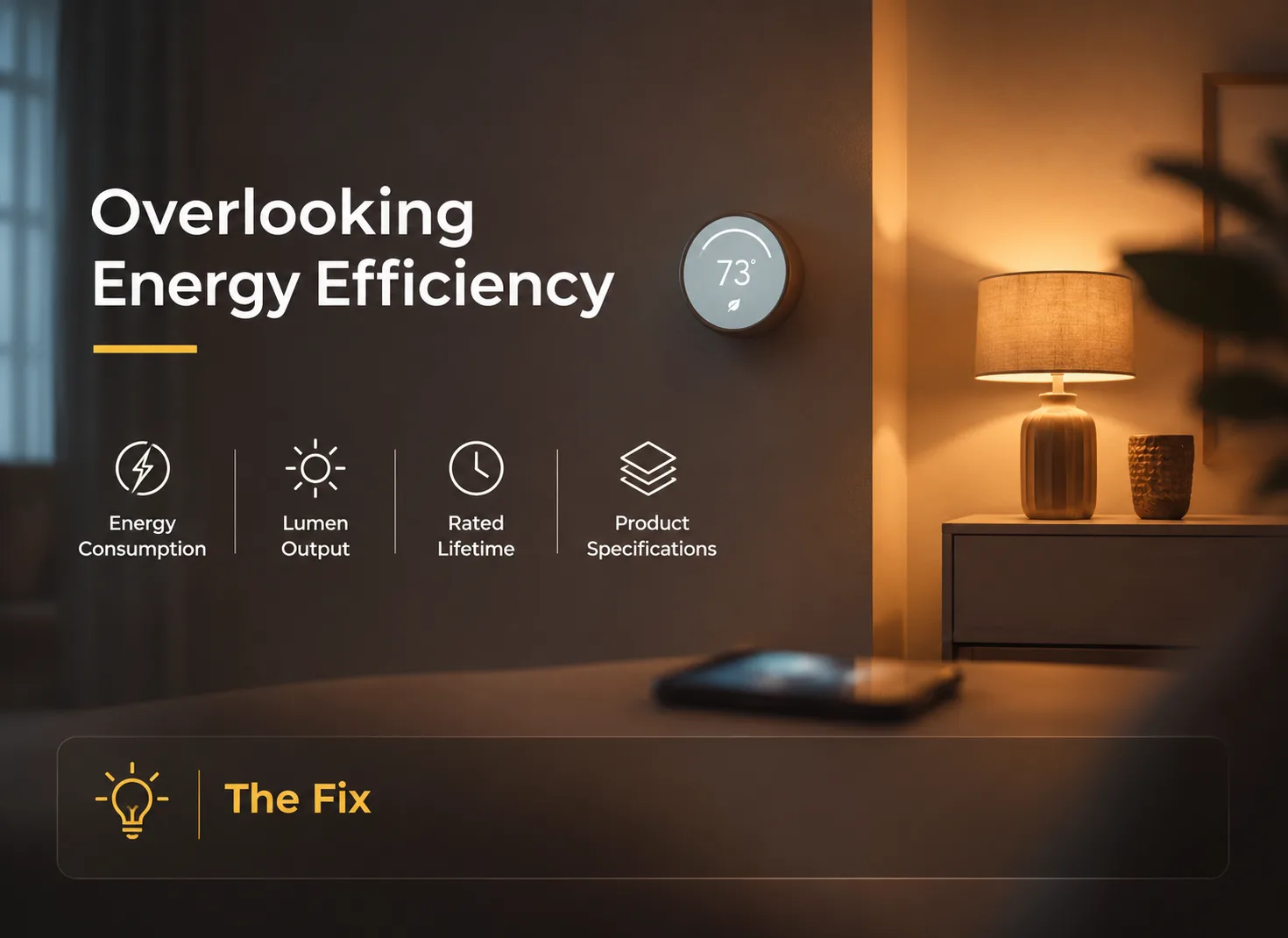
Differences in efficiency, driver quality, light output, and operating lifetime can influence long-term costs.
Choosing a fixture based solely on its low purchase price may lead to greater expenses over time.
The Fix: Review the product’s energy consumption, lumen output, rated lifetime, and manufacturer specifications.
Look for lighting that balances efficiency, visual comfort, and suitability for your space.
4. Ignoring Dimming Compatibility
Dimmable lighting is a convenient way to adjust brightness and create different atmospheres.
However, not every LED light is compatible with every dimming system.
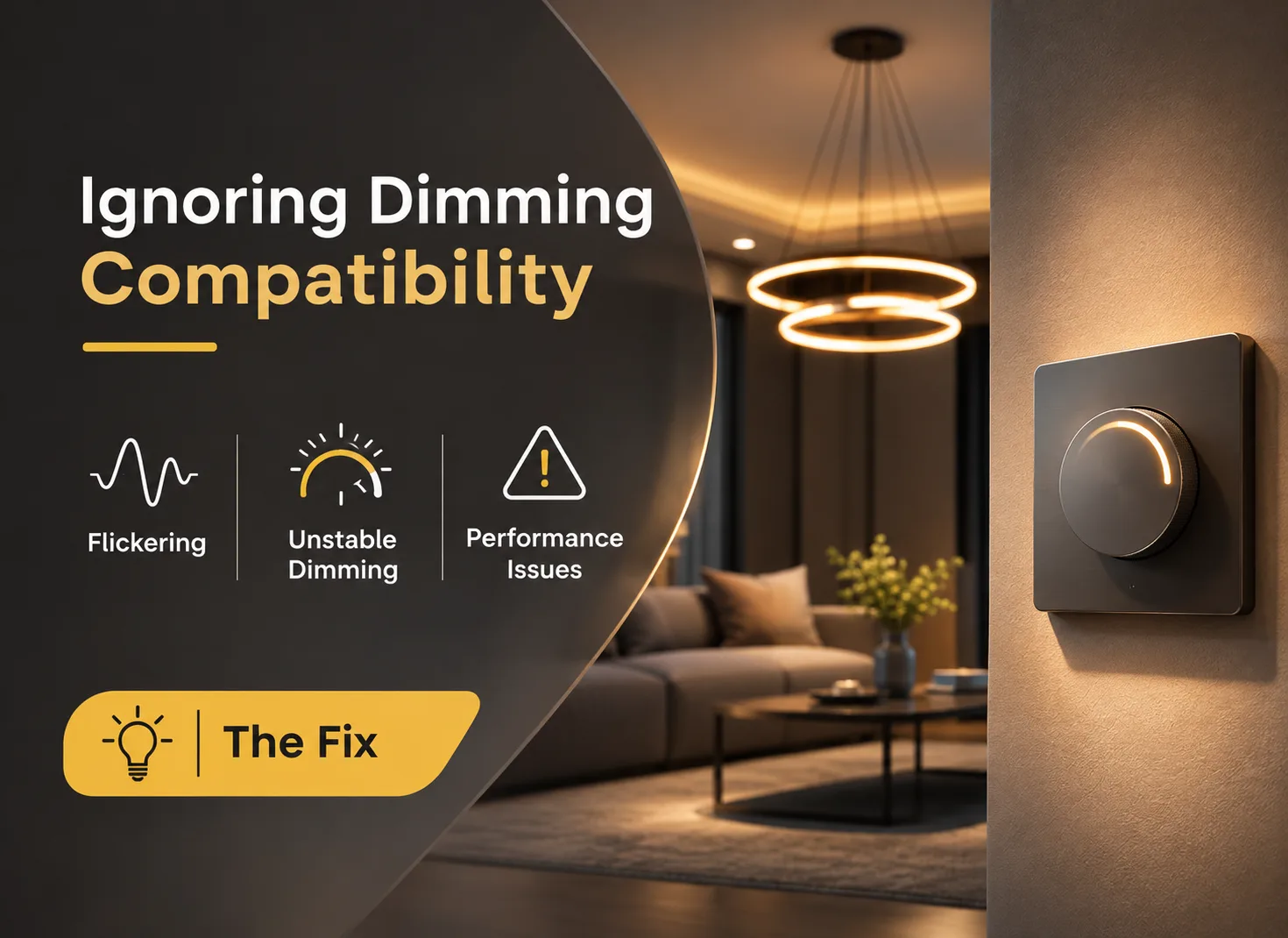
Using incompatible components can cause flickering, unstable dimming, or unwanted performance issues.
The Fix: Check that your LED fixture, driver, and dimmer are compatible before installation.
If you’re unsure, consult a qualified electrical professional to determine the appropriate system.
5. Forgetting About Maintenance Costs

Lighting maintenance is often overlooked during the purchasing process.
Fixtures installed in high ceilings, staircases, or difficult-to-access areas can be expensive to replace or repair.
The Fix: Consider serviceability when selecting your lighting.
Check whether the fixture uses replaceable components, whether replacement drivers are available, and what the warranty covers.
Understanding maintenance requirements in advance can help you avoid unnecessary expenses later.
6. Using the Wrong Lighting for the Environment
A fixture designed for a dry indoor environment may not be appropriate for bathrooms, outdoor areas, or locations exposed to moisture and dust.
Installing unsuitable lighting can compromise performance and create safety concerns.
The Fix: Check the fixture’s IP rating and installation requirements.
Choose lighting designed for the specific environmental conditions, and have it installed according to applicable electrical safety requirements.
7. Leaving Lighting Decisions Until the Last Minute
Lighting should be considered during the early stages of interior design and renovation.
Waiting until ceilings and electrical systems are completed can limit your fixture options and make adjustments more expensive.
The Fix: Develop a lighting plan before construction or renovation work begins.
Consider ceiling height, furniture placement, light distribution, electrical connections, and control requirements.
A coordinated plan can help reduce unnecessary modifications and create a more functional result.
Make Every Light Count With MEGAPLAN!
At MEGAPLAN,we believe every lighting choice should serve a purpose.
Discover modern lighting solutions that combine practical performance with beautiful design.